
Bathroom Artifact - Acidic Thickener
Common stains in bathrooms mainly include limescale, urine scale, grease, soap scum, and dust. Since these typical stains on sanitary ware are water-insoluble or oxides, dissolving and removing them requires a certain level of acidity. Therefore, common toilet cleaners often contain acidic components, and acidic liquid cleaners are also the most common type of toilet cleaners.
To ensure the cleaning agent provides effective cleaning performance, many manufacturers choose to add acidic thickeners to the product to increase its viscosity.
Concept of acidic system thickeners:
Acidic system thickeners are formulated by combining nonionic surfactants with cationic surfactants, and can be used for thickening in strongly acidic systems. They offer good rheological curves and stable, rapid thickening capability.
Acidic thickeners provide excellent thickening effects for acidic systems, extending the residence time of the acidic solution on cleaning surfaces, improving cling, while also preventing injuries caused by acid splashing during use.
Thickening principle of acidic thickeners:
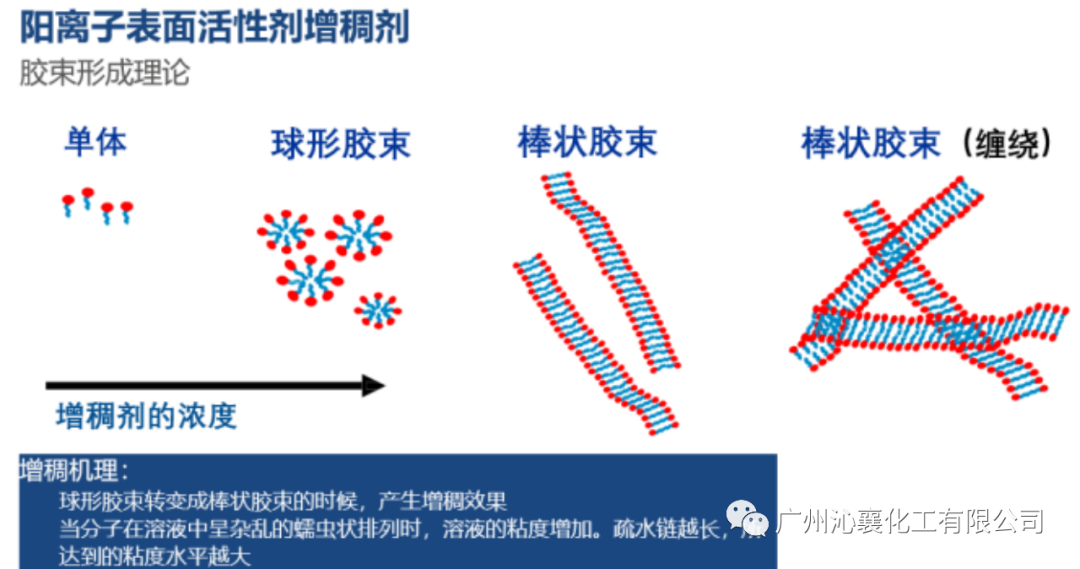
Types of thickeners can be classified as:
Natural thickeners (cellulose ethers, xanthan gum, guar gum, starch)
Synthetic thickeners (polyacrylates, polyurethanes, polyethylene glycols)
Cationic surfactants(quaternary ammonium salts, amine oxides, polyoxyethylene ether amines)
Among cationic surfactants, quaternary ammonium salts and polyoxyethylene ether amines are more suitable for acidic systems.
Recommended products:
Arquad16-29 (Nouryon)
EthomeenO/12 (Nouryon)
EthomeenT/12 (Nouryon)
HS100 (modified xanthan gum)
S120 (Csore)
About Bathroom Essentials- -That concludes Qinxiang New Materials' introduction to acidic thickeners. For those who would like to learn more, please feel free to contact us.